UltraClear laser treatment in London
Published prices from £650 for the area around the eyes, and from £850 for the full face.
UltraClear Laser London connects you with the doctor who gives UltraClear laser resurfacing at UNTIL Marylebone, a fractional laser that treats fine lines, rough texture, sun damage and acne scars at a depth matched to your skin and to the recovery time you can take.

The short answer
UltraClear laser, in brief
UltraClear is a fractional resurfacing laser. It sends infrared light at 2910 nanometres down a fine glass fibre, and because water in the skin absorbs that wavelength so readily, each pulse clears a tiny column of tissue while leaving little heat in the skin around it. Thousands of these columns are placed in a grid, the untouched skin between them heals the gaps, and new collagen is thought to form underneath over the following months.
The same device runs from a light surface pass with a day or two of redness to deep coring with around a week or more of recovery, so the depth is planned around what you want to change and how much downtime you can take. At UNTIL Marylebone, 1 Orchard Street, the practitioner's published prices start at £650 for the area around the eyes. Use the enquiry form and UNTIL Health Concierge sets up a skin assessment; the laser resurfacing glossary explains any term on the way.
UltraClear laser at a glance
- Typical course1 to 2 sessions to refresh, 3 to 4 for acne scars
- Downtime1 to 3 days light, 7 to 10 days deep
- ComfortNumbing cream for most settings
- Results buildOver the weeks and months after
- Published pricesFrom £650 around the eyes
- WhereUNTIL Marylebone, W1H
What is UltraClear laser resurfacing?
Laser resurfacing removes or injures the outer layers of skin under control so that the skin heals with fresh surface cells and new collagen beneath them. UltraClear does this fractionally: it treats a grid of microscopic columns and spares the skin in between.
How the 2910 nm wavelength works
Every resurfacing laser is defined by the wavelength of its light, because that decides what absorbs it. UltraClear emits at 2910 nanometres, very close to the point at which water absorbs infrared light most strongly. Skin is mostly water, so the energy is taken up almost entirely in the column the beam hits and spreads little heat sideways. That is the reason the device is described as a cold fibre laser, and the reason given for shorter redness than a CO2 laser, whose 10,600 nm light heats a wider margin of skin. The light is generated inside an erbium-doped glass fibre, which is also what lets the beam be focused into very narrow, very deep channels when a practitioner needs them.
A fractional laser with an adjustable depth
A fractional laser's two main settings are depth, how far each column reaches, and density, how much of the surface is treated. Shallow, sparse columns refresh tone and texture with a day or two of redness. Deeper, denser columns reach the dermis, where lines and scars sit, and need a week or more to heal. Because UltraClear covers that whole range, the practitioner can treat the cheeks for scarring and the eyelids more lightly in the same session, and can step a course up gradually in darker skin. Fractional laser and the other technical terms are defined in the glossary.
UltraClear laser results in published studies
The research is encouraging and small. In a 2024 study in Lasers in Surgery and Medicine, 13 people with rolling or boxcar acne scars had three sessions at six- to eight-week intervals, and blinded reviewers rated their scars a mean of 47% better three months after the last one, with only mild redness and swelling. Other studies of sun-damaged skin enrolled between 20 and 37 people. None had a control group, all were in lighter skin types, and several authors advise the manufacturer, so treat the figures as a guide. In the US the laser is cleared by the FDA for wrinkles, texture, acne scars and benign pigmented marks; melasma is not on that list.
The four UltraClear settings
The practitioner at UNTIL Marylebone publishes UltraClear in four settings, each priced separately. They are points on one scale of depth, and a plan often mixes them across the face.
3D MIRACL, the lightest pass
3D MIRACL works below an intact surface, heating the upper skin without opening it. It suits dull or uneven tone, early sun spots, mild texture and people who want a glow before an event without visible peeling. A pass takes 10 to 15 minutes, recovery is usually one to three days of pinkness, and it is given as a short series of two or three sessions. Because the surface stays closed, it is the setting most often used to start a course in darker skin or on someone new to laser. It will not shift deep lines or scars on its own.
Clear mode for tone and texture
Clear is a light fractional resurfacing of the upper layers. It goes a little further than 3D MIRACL, so it also softens fine lines, refines enlarged pores and improves shallow acne marks and surface pigmentation. Expect three to five days of redness and some fine flaking as the treated surface sheds, and a series of two or three sessions. Many people describe the skin as smoother and brighter once the flaking has finished, with collagen continuing to build for months afterwards.
Ultra mode for lines and scarring
Ultra sends the columns deeper into the dermis. It is the setting for established lines around the eyes and mouth, acne scarring, sun-aged skin and early loss of firmness along the jaw. Recovery is longer, around five to seven days of redness, swelling and bronzing, and one or two sessions are usually planned rather than a long series. The practitioner may add more than numbing cream for comfort at this depth.
UltraClear laser coring
Coring is the deepest technique: instead of heating each column it removes a tiny cylinder of skin, and as thousands of these close the skin tightens and fills with new collagen. It is used for deep acne scars, surgical and injury scars, stretch marks and small areas of looser skin, including the delicate skin of the upper eyelids in selected people. A coring session takes around 30 minutes of laser time, it carries the longest recovery and the highest price of the four settings, and the plan is built individually at the assessment.
What UltraClear laser treats
UltraClear is chosen for problems that sit in the skin itself: its surface, its pigment and the collagen beneath. It does not add volume or lift tissue.
Laser resurfacing for acne scars
Acne scars sit below the surrounding skin because collagen was lost as the spots healed. Resurfacing removes the sharp edges and prompts new collagen to fill from below, so rolling and shallow boxcar scars usually soften most, while narrow ice pick scars respond less and may need coring. Acne scarring is the indication that needs the most sessions, typically three or four, spaced to let the skin recover between them. Active spots should be settled first. Laser treatment for acne scars in London covers scar types and the published study.
Laser treatment for pigmentation and sun damage
Brown patches from years of sun, rough sun-aged texture and a blotchy tone respond to the lighter and middle settings, often in a short series. Pigment that comes and goes with hormones, such as melasma, is less predictable and has no published UltraClear study behind it, and in darker skin any laser can itself leave temporary dark marks, so the practitioner judges the setting carefully and may ask you to prepare the skin first. Laser treatment for pigmentation in London goes through each type.
UltraClear laser under the eyes
Crepey skin and fine lines under and around the eyes are treated with low-energy passes, and coring is used on the upper eyelids for selected people. The practitioner's published price for the area around the eyes is the lowest of any area, from £650 in the lightest setting. Hollows and puffiness under the eye are a different problem that resurfacing does not change. UltraClear laser under the eyes covers the area in detail.
Laser resurfacing for wrinkles
Fine lines at the eyes, the mouth and across the cheeks soften as new collagen forms under the treated surface, and deeper settings do more for established lines. Lines that come from movement, such as frown lines, are made by muscle and change less with resurfacing.
Each concern has its own page: ice pick, boxcar and rolling scars, sun damage and age spots, wrinkles under the eyes and enlarged pores and textured skin.
UltraClear laser for darker skin types
Laser resurfacing in medium and dark skin carries one main extra risk: post-inflammatory hyperpigmentation, a temporary darkening that follows the inflammation of treatment. Lasers that leave more heat in the skin raise that risk, which is one reason the low residual heat of the 2910 nm fibre matters. The manufacturer states that its superficial and moderate settings suit all skin types and that its advanced settings are designed for skin types I to III, and the published studies were done mainly in lighter skin. In practice, darker skin is treated with lower energy and density, sometimes in stages, often after a few weeks of preparing the skin, and always with strict sun protection afterwards. The assessment includes your Fitzpatrick skin type and how your skin has reacted to spots, grazes and past treatments, and the practitioner will say plainly if a lighter setting or a different treatment would suit you better. Fitzpatrick skin types are explained in the glossary.
What happens at an UltraClear appointment
The skin assessment
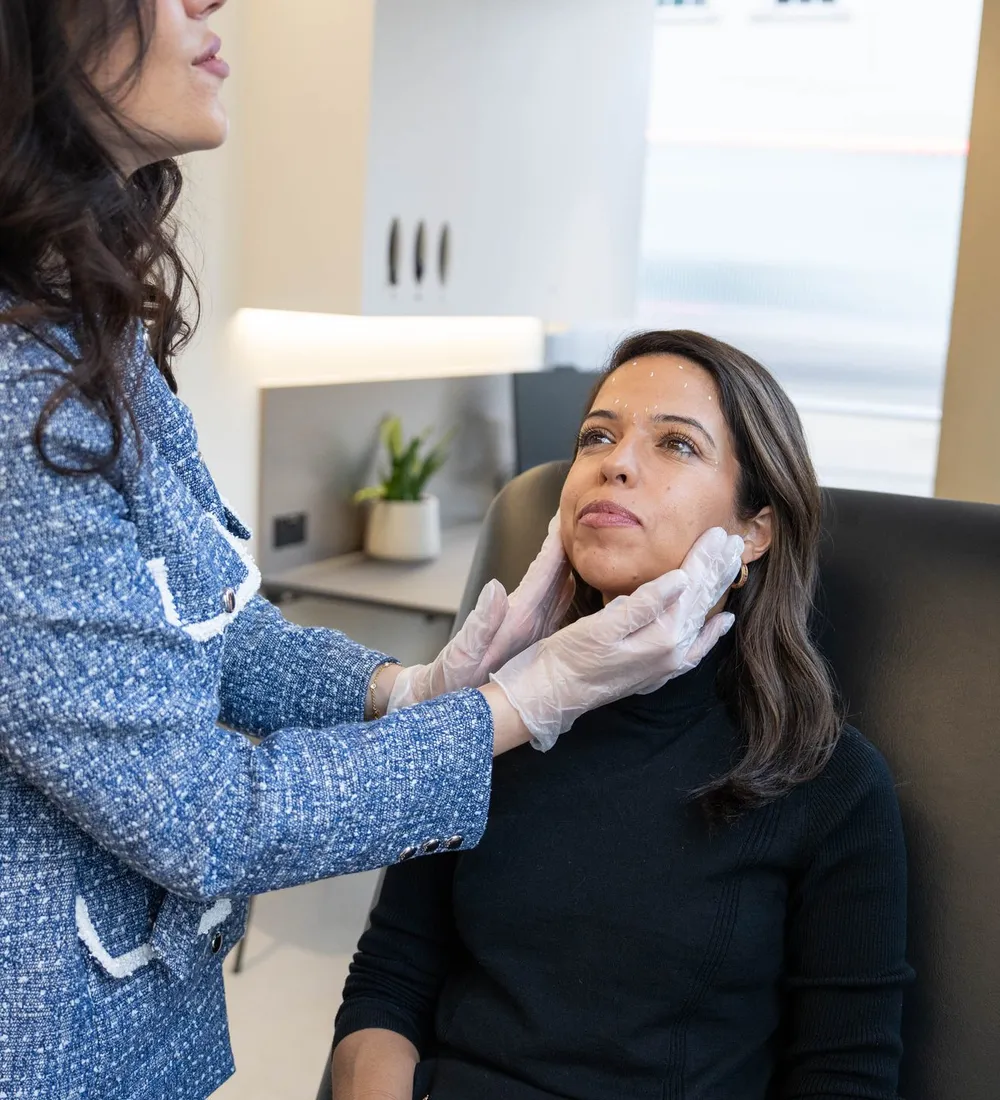
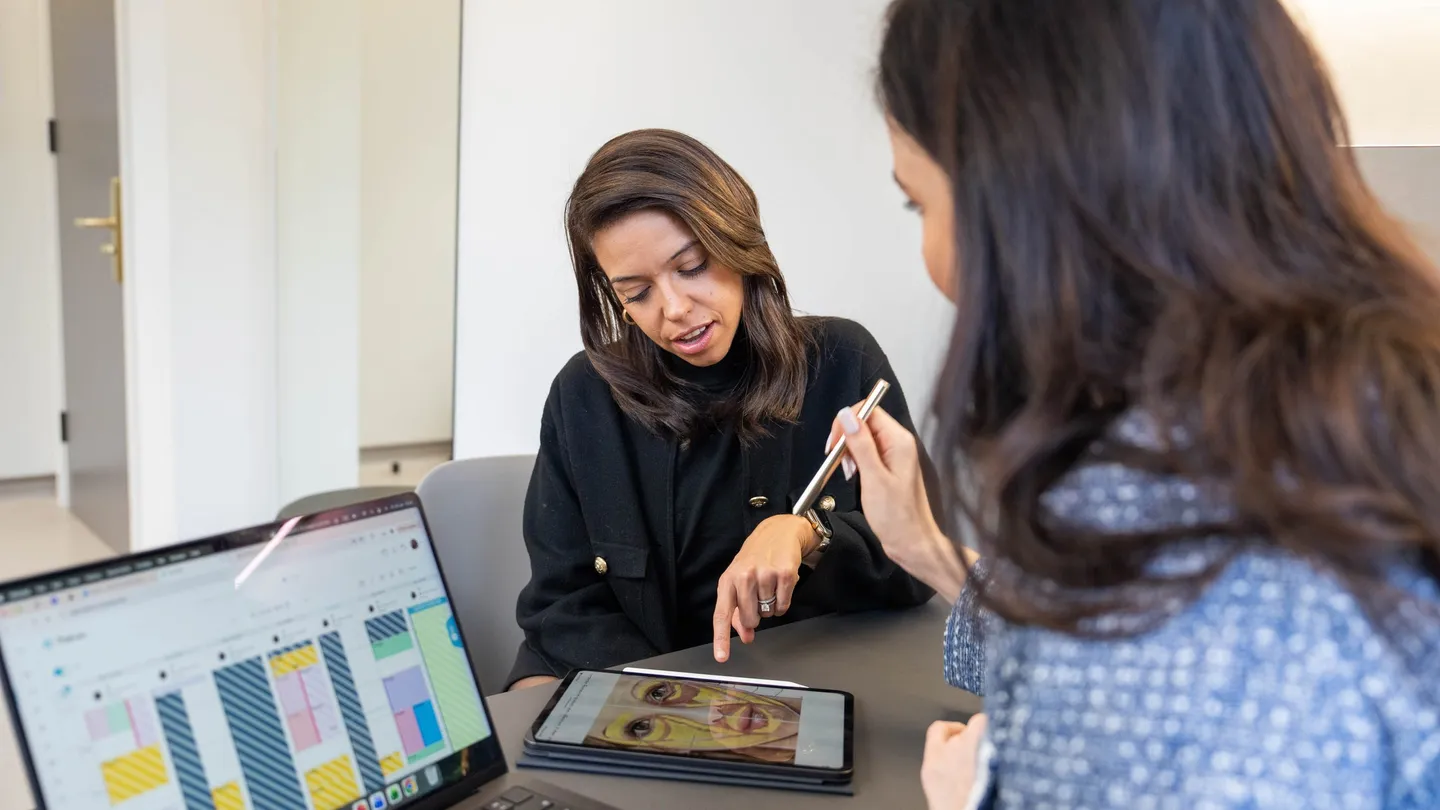
Before any laser is booked, the practitioner examines your skin in good light, asks what you want to change, and goes through your medical history, medicines, cold sores and any tendency to scar or darken. You should leave knowing which setting suits you, how many sessions, how much downtime to plan for and the full price.
Preparing your skin
Keep the area out of strong sun and stop fake tan for four weeks beforehand. You may be asked to pause retinoid creams for several days, and darker skin is sometimes prepared with a skincare routine first. If you get cold sores, say so, because antiviral cover may be offered before treatment near the mouth.
The session
For most settings numbing cream goes on first and is left to work; some light passes need none. The practitioner then passes the laser handpiece over the skin in a planned pattern, adjusting depth and density area by area. Most people describe a warm, prickly feeling. A light pass takes 10 to 15 minutes of laser time and coring around 30, and for the deeper settings more than numbing cream may be used.
Aftercare
The skin feels hot and looks red, like sunburn, for the first evening. Use the moisturiser and SPF 50 you are given, let flaking shed on its own, and avoid saunas, hot showers and hard exercise for one to two days following a light pass and longer after a deep one. Restart active skincare only when the practitioner says so.
UltraClear laser downtime and recovery
Recovery depends almost entirely on the depth chosen, which is why the same device can mean a weekend or a week off.
- Lightest settings: pinkness for one to three days, like mild sunburn, and you can usually return to work the next day with make-up once the skin has calmed.
- Clear and similar light fractional passes: three to five days of redness with fine flaking.
- Moderate depth: four to seven days of redness and bronzing as the treated surface dries and sheds.
- Deep resurfacing and coring: around seven to ten days of recovery, with swelling in the first days.
Plan important events at least two weeks after a moderate or deep session. Freshly treated skin is especially vulnerable to the sun, so daily SPF 50 matters more in the weeks after treatment than at any other time.
UltraClear laser before and after: results by week
The change after UltraClear comes in two stages: a fresher surface once the skin has healed, then a slower improvement as collagen rebuilds underneath.
- Days 1 to 10: redness, flaking or bronzing, depending on the depth. This is healing rather than the result.
- Weeks 1 to 3: the new surface looks smoother and brighter, and fine texture and surface pigment are visibly better.
- Months 1 to 3: collagen remodelling continues, so lines and scars keep softening after the skin looks healed.
- After a course: acne scars are assessed a few months on from the final one of three or four sessions.
Before your first session, photograph your skin yourself, keeping the light and the angle constant, and repeat three months on. Ask the practitioner to show you before-and-after photographs of their own patients with skin and concerns like yours, taken in matching light.
UltraClear laser side effects and safety
Expected effects
Redness, warmth, some swelling and a few days of flaking or bronzing are part of healing, and they last longer the deeper the treatment.
Less common problems
Temporary darkening of the skin, which is more likely in medium and dark skin and after sun exposure; a cold sore flare in people who get them; infection of treated skin, which is why picking and dirty make-up brushes matter; and, rarely, scarring. Anything that becomes increasingly painful, weeps or crusts yellow should be reported to the treating practitioner that day.
Who should wait or avoid it
Anyone pregnant or breastfeeding, anyone with a tan or recent sunburn on the area, anyone with an active infection or cold sore there, and anyone who has taken medicines that make the skin sensitive to light in the last six months, until the practitioner has assessed it. A history of keloid or raised scars needs discussion first.
UltraClear laser vs CO2 laser
Both are fractional resurfacing lasers that remove columns of skin to trigger new collagen. The difference is heat. A CO2 laser works at 10,600 nm and leaves a wide zone of heated skin around each column, which tightens tissue strongly but brings longer redness, a longer recovery and a higher risk of colour change in darker skin. UltraClear's 2910 nm light is absorbed more completely in the column itself, so less heat spreads and recovery after a comparable depth is usually shorter. A CO2 laser may still be the stronger choice for heavy sun damage and marked laxity in fair skin; your assessment settles which suits you. UltraClear vs CO2 laser compares the two in full.
How much does UltraClear laser cost in London?
The practitioner UltraClear Laser London connects you with publishes UltraClear prices from £650 for the area around the eyes in the lightest settings, £850 for the full face and £1,250 for the face, neck and chest. Deeper Ultra settings start at £1,250 around the eyes and £1,750 for the face, and coring starts at £2,750. These are published prices, checked on 13 October 2026; this site charges nothing and sets none of these prices.
What moves the price
The area, the setting and depth, and whether the plan is one session or a series. Check whether a quote is for a single session or a series, and whether it includes a review visit. A quote far under other London prices usually means a lighter setting than the quote's headline suggests, so compare the depth as well as the figure. UltraClear prices in London lists every setting and area.

Who gives UltraClear at UNTIL Marylebone
UltraClear at UNTIL Marylebone is delivered by a doctor-led aesthetic practice that runs its own clinic in the club, charges its own fees and carries clinical responsibility for you. The doctor is GMC-registered and holds clinic on Tuesdays and from Thursday to Saturday. Look the doctor up on the GMC's online register before your first session. About UltraClear Laser London sets out who runs this site and what UNTIL Health Concierge does, or you can contact UltraClear Laser London with a question first.
UltraClear laser near you in central London
You will find UNTIL Marylebone at 1 Orchard Street, W1H 6HJ, just north of Oxford Street. By TfL's walking times, Marble Arch station is about 4 minutes away and Bond Street, served by the Elizabeth, Central and Jubilee lines, about 7, with Mayfair and Marylebone High Street close by. The club itself opens at 06:00 Monday to Friday, while the practitioner's UltraClear clinics run from 10:00 to 19:00 on Tuesday, Thursday, Friday and Saturday. UltraClear at UNTIL Marylebone has directions and what to expect on the day.
Skin concerns UltraClear treats
Each concern has its own page with causes, what laser can change and what it cannot.
Areas UltraClear treats
Face
Beyond the face
FAQ
UltraClear treatment
questions and answers
What does one UltraClear session cost in London?
The practitioner UltraClear Laser London works with publishes prices from £650 for the area around the eyes and £850 for the full face in the lightest settings. Deeper Ultra treatment starts at £1,250 and coring at £2,750. The price depends on area and depth; the doctor confirms it at your assessment, before you commit.
How many UltraClear sessions will I need?
That depends on what you are treating and how deep. A refresh of tone and texture usually takes one or two sessions, and acne scarring three or four, spaced to let the skin recover. UltraClear Laser London connects you with a practitioner who sets the number at your assessment and reviews the result before booking more.
How long is the downtime after UltraClear?
From one to three days of pinkness after the lightest settings to around seven to ten days after deep resurfacing or coring. Moderate depths bring four to seven days of redness and bronzing. UltraClear Laser London suggests planning events at least two weeks after a moderate or deep session and wearing SPF 50 daily.
Is UltraClear laser painful?
Most people describe a warm, prickly feeling rather than pain, and numbing cream is used for most settings. Deeper settings feel stronger, and the practitioner may add more than cream at that depth. UltraClear Laser London suggests raising any worry about comfort at the assessment so the plan allows for it.
Can UltraClear be used on dark skin?
Often, with care. Darker skin is more prone to temporary darkening after any laser, so it is treated at lower energy, sometimes in stages and after preparing the skin. UltraClear Laser London connects you with a doctor who checks your skin type and history first and will say if another treatment suits you better.
When will I see UltraClear results?
The surface looks smoother and brighter once it has healed, usually within one to three weeks. Lines and scars keep improving for months as collagen rebuilds, so acne scars are best compared a few months on from the final session. UltraClear Laser London suggests comparing photographs taken before treatment and three months after, in matching light.
Is UltraClear gentler than a CO2 laser?
At a comparable depth it usually heals faster, because its 2910 nm light leaves less heat in the surrounding skin than a CO2 laser at 10,600 nm. A CO2 laser can still suit heavy sun damage in fair skin. UltraClear Laser London connects you with a practitioner who explains which laser suits your skin and goals.
Can UltraClear be combined with injectable skin treatments?
Yes, and practitioners often plan them together, because resurfacing works on the surface and collagen while injectable skin boosters work on hydration and quality from within. The order and spacing matter. UltraClear Laser London sends your enquiry to a doctor who plans the sequence at your assessment, well before treatment day.
Related Treatments
Get Started
Tell us about your skin,
and a practitioner plans the depth with you.
UltraClear Laser London • UNTIL Marylebone, 1 Orchard Street, London W1H 6HJ
Ask About UltraClearUNTIL Health Concierge gets back to you to set up a skin assessment at UNTIL Marylebone. The practitioner confirms the setting, the downtime and the price before any session is booked.